Select a pull request from the list on the Pull requests page and click the Review tab to begin your review.
You cannot approve or request changes in pull requests that you authored, but you can leave comments.
The Review tab opens with the Visual view by default, showing rendered pages before and after updates for visual comparison.
Click Code on the toggle to view the text diff instead. For multi-file updates, select different pages from the sidebar navigation.
Use the file tree filter on the left to find specific pages.
Add feedback as comments in either visual or code diff views.
To add comments in the visual or code diff view:
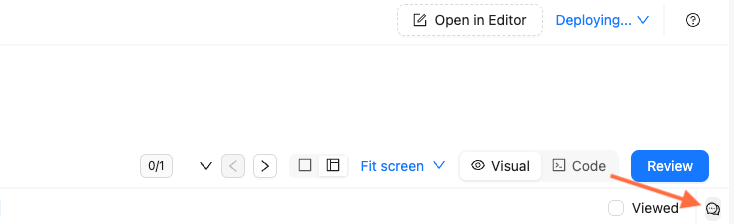
Click the comments icon on the right side.
Enter your feedback.
Click Comment.
To add line-specific comments in code diff view:
Hover over the line numbers.
Click the plus icon.
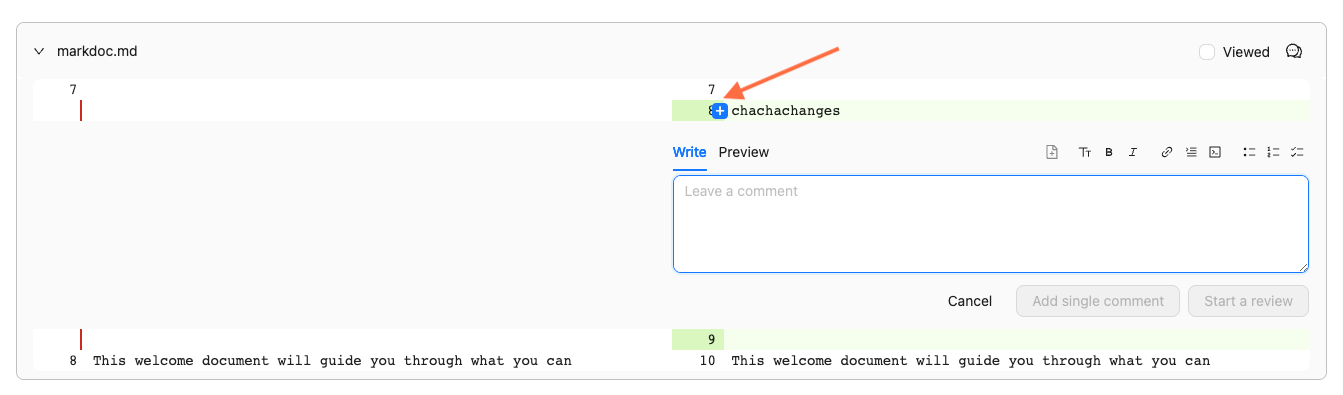
Enter your feedback.
Select one option:
- Add a single comment: to add a standalone comment.
- Start a review: to add multiple comments in a complete review.
Use the text field toolbar to format text, add links, or insert images. Mention people or teams with the @ symbol followed by their name.
To add line-specific suggestions in code diff view:
Hover over the line numbers.
Click the plus icon.
Click the suggestion icon.
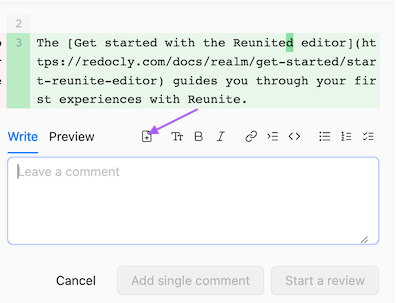
Make changes inside the suggestion code block.
Select one option:
- Add a single comment: to add a standalone comment.
- Start a review: to add multiple comments in a complete review.
You can then let the author of the pull request respond or commit your suggestion. You can also commit the suggestion yourself, depending on your ownership and workflow.
With larger pull requests, not all edited files may be in your ownership or area of expertise. Additionally, pull requests with many large diffs can become more challenging to navigate. You can filter the edited files or mark them as viewed.
To filter the files in the pull request:
- In the sidebar on the left, enter a string that matches a part of a file name, file extension, or a folder.
You can remove the filter by clicking the x icon in the filter text field.
To hide the files you have already reviewed:
- In the top-right corner of a file, tick the Viewed checkbox.
You can also mark all files as viewed, by clicking the Review all button.
After reviewing the pull request, click the Review button, add your final thoughts, and select one option:
- Comment: to provide feedback without explicit approval or rejection.
- Approve: to indicate the pull request is ready to merge.
- Request changes: to specify issues that require resolution before approval.
Format your review comment using the toolbar options, then click Submit review. To configure PR approval requirements (such as the minimum number of required approvals), use your Git provider's settings (for example, GitHub branch protection rules).
Your project can use a connected Git provider (GitHub, GitLab, Azure DevOps, or Bitbucket). In that case, after the review is submitted, you will see a Visual review check on it.
The check links back to the Visual review tab in Reunite and displays a short status (for example, Pending, Approved, Changes requested, or No changes). Visual review check updates automatically when you push a commit, submit a review or comment in Reunite.
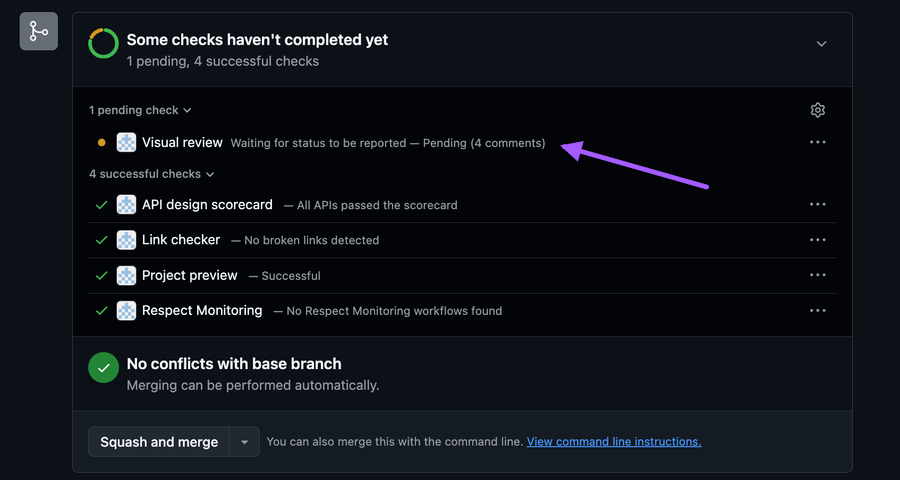
Projects have the Visual review check enabled by default. To disable it:
- In your project, navigate to Settings > Git hosting and switch off Visual review check.
When the check is disabled, a pull request that waits for a review gets the Skipped status instead of Pending. Approvals and change requests are still reported.
If you connect your Git provider and Reunite accounts before submitting your review, it will post a review to your Git repository.

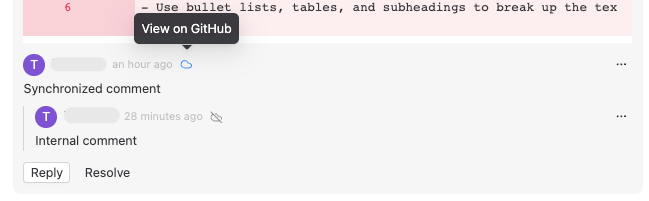
Comments synced to an external provider have a cloud icon next to them. Click this icon to view the comment on the provider’s platform.
Your accounts can be connected while you do not have review permissions in the provider. In that case, your review appears in Reunite only and is never posted to the provider.
After a Ready for review pull request receives approval and passes checks, click Merge.
Click Merge without requirements only for urgent changes when you're certain they won't cause build issues.
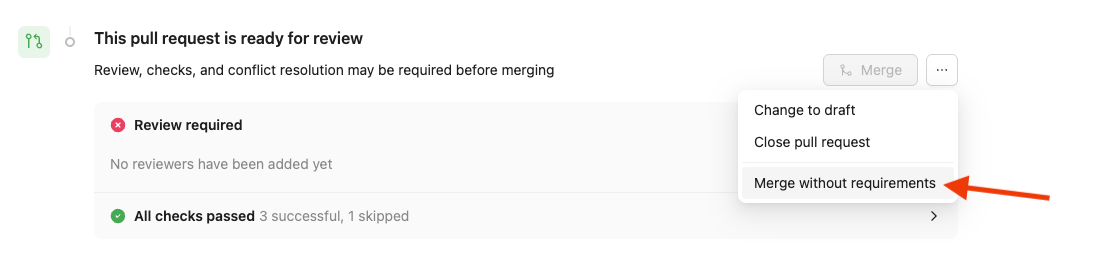
The Merge without requirements button visibility is not customizable.
After merging, the updates appear in the main branch and trigger a deployment to publish changes to the production project.
- Use the editor - Create and edit content in Markdown and Markdoc with collaborative editing features and real-time preview capabilities
- About Reunite - Understand Redocly's cloud platform features for collaborative content management and workflow automation
- Reunite configuration reference - Configure deployment settings to allow publishing builds despite broken links or Markdoc syntax issues